
How to Reduce Food Waste at Home: Cook From Your Fridge First
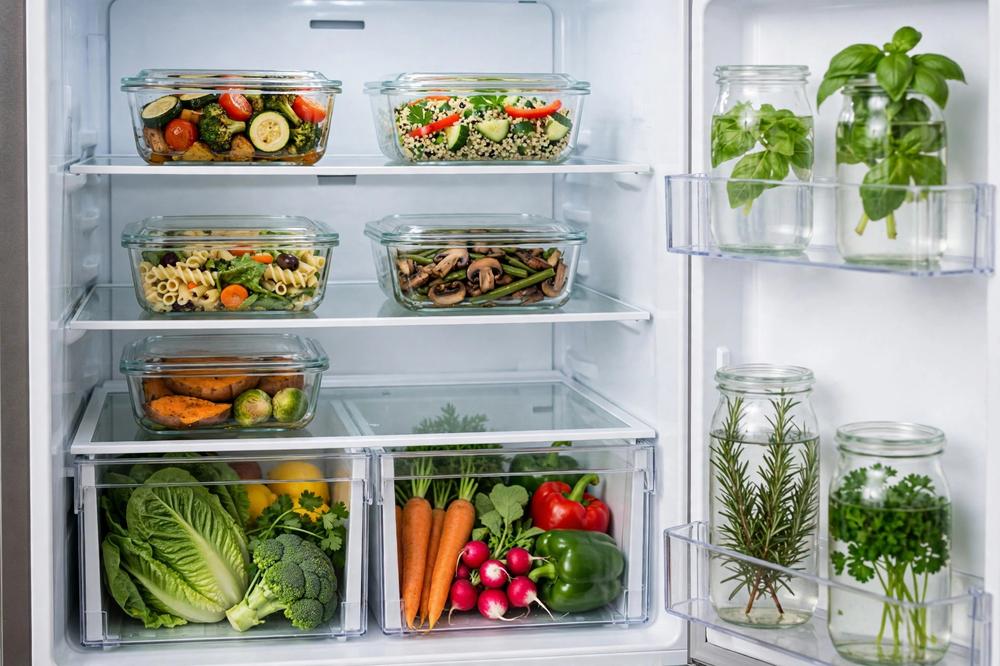
Short answer: the average household throws away roughly a fifth of the food it buys — and most of it was never rotten when it was bought. It simply sat in the fridge, unseen, until it was too late. The fix is not shopping less or eating less. It is flipping the order of your kitchen: cook from your fridge first, and let the shopping list come second. This guide turns that idea into a simple weekly system — a ten-minute inventory, an eat-first shelf, flexible template meals, and storage habits that buy you extra days.
Why the fridge is where food goes to die
The supermarket gets the blame, but the fridge is the real crime scene. We shop for the meals we imagine cooking, then real life intervenes — a late meeting, a takeaway night, a change of plans. Meanwhile the food we already own is quietly aging behind a closed door. Out of sight really is out of mind: drawers hide vegetables, back shelves hide leftovers, and by the time we open the door with a plan, half of what we bought has already turned.
There is a second culprit: the date label. "Best before" is about quality, not safety, yet most of us read it as a deadline and bin perfectly good food. Then there is the recipe trap — we pick a dish first, discover we are missing three ingredients, and buy a full bag of something for one tablespoon.
None of this is a willpower problem. It is a system problem: without a way to see what you own and a rule for using it first, waste is the default outcome. So the system below does not ask you to be more disciplined. It changes what you see when you open the fridge, and what you cook first.
The fridge-first system: five parts that fit together
Each part is small on its own. Together they form a loop: you know what you have, you eat the oldest first, you cook flexibly, you store things so they last, and you only shop for the gaps. Once the loop runs for two or three weeks, it mostly runs itself.
1. The 10-minute weekly inventory
Once a week — Sunday evening works for most households — open the fridge and take stock. Not a spreadsheet, just a look: what is in there, what is getting old, and what could become a meal. Write the short list on the fridge door or in your phone notes, oldest items at the top. That list becomes your menu for the next few days, and the only honest basis for a shopping list.
If even ten minutes feels like a chore, take a photo of the open fridge instead. A photo forces the same honest look, and it stays on your phone for the week — at the store, you can check it instead of guessing. An app like FridgeChef goes one step further and turns that photo into an inventory list with freshness notes, so the audit takes seconds.
2. The eat-first shelf
Give the most perishable food the best real estate: one shelf, at eye level, where everything that must be eaten soon lives. Cooked leftovers, opened dairy, soft herbs, ripe fruit, anything with two days left or less — it all goes on the eat-first shelf, in clear containers so you can see it without opening anything. The rest of the fridge can stay as it is.
This one change does most of the work. Food that is visible gets eaten; food that is hidden gets thrown away. When you are hungry and undecided, the eat-first shelf answers the question "what should I cook?" before you even ask it. Move items onto the shelf as they age, and clear it completely at least twice a week.
3. The use-it-up order
Not everything spoils at the same speed, so cook in priority order — most fragile first. Think of it as a queue, and work your way down:
| Use first (1–2 days) | Use soon (3–4 days) | Can wait (5+ days) |
|---|---|---|
| Leafy greens, fresh herbs, berries, cooked leftovers, opened milk | Tomatoes, peppers, mushrooms, eggs, soft cheese, cooked grains | Carrots, cabbage, onions, potatoes, hard cheese, butter, condiments |
When a meal needs a vegetable, take it from the left column before the right one. A stir-fry that uses the wilting spinach today beats a perfect recipe that uses the carrots you could have kept for another week. Over a month, that one habit rescues more food than any shopping rule.
4. Template meals instead of recipes
Fixed recipes are the enemy of using things up, because they demand exact ingredients. Template meals work the other way round: a structure that accepts whatever you have. Learn five of them and you can feed a household from almost any fridge:
| Template | How it rescues food |
|---|---|
| Fried rice | Day-old rice plus any vegetables, egg and soy sauce — the universal leftover rescue |
| Soup or stew | Soft vegetables, beans, grains and herbs simmered together; nothing needs to look pretty |
| Frittata or scramble | Eggs carry wilting greens, peppers, cheese and leftover potatoes in one pan |
| Grain bowl | Any grain + any protein + any roasted vegetables + a sauce from the door shelf |
| Pasta with what is left | Garlic, oil, vegetables and cheese turn nearly any fridge remnant into dinner |
Plan two "flex nights" a week with no recipe chosen in advance. On those nights the fridge decides — you pick the template that fits what is oldest, and cook. If you want inspiration for what fits, our fridge-first cooking guide explains the four-part formula behind it, and FridgeChef can match recipes to exactly what your photo shows.
5. Storage habits that buy you extra days
Good storage is not about buying gadgets; it is a handful of habits that slow spoilage down. Herbs last a week longer standing in a jar of water in the door, like flowers. Leafy greens stay crisp wrapped in a dry cloth inside a container. Leftovers belong in clear glass containers — if you cannot see it, you will not eat it. Freeze things before they turn, not after: bread, herbs, spinach, grated cheese and cooked grains all freeze well, and a frozen ingredient is a future meal instead of a bin bag.
Shop last: buy only the gaps
Shopping comes at the end of the system, not the start. Once the inventory is done and the week's meals are sketched from what you own, the shopping list writes itself: it is the short list of gaps — the protein for Wednesday, the one missing spice, the milk that ran out. Everything else is already in the fridge.
Two rules make this stick. First, never shop hungry or without the list; that is when the unplanned bag of spinach appears. Second, prefer smaller, more frequent shops over one giant weekly haul. A fridge that is 80% full gets eaten; a fridge stuffed to the door hides food until it rots.
What a fridge-first week actually looks like
Monday starts with the Sunday inventory: the spinach and mushrooms are oldest, so Monday is a frittata and Tuesday a mushroom pasta. Wednesday is a flex night — the leftover chicken and softening peppers become fried rice. Thursday the grain bowl uses the carrots and the last of the feta. Friday, the fridge is nearly empty by design, and the weekend shop is a small one: only the gaps for next week's plan. Nothing was thrown away, and no meal felt like a compromise.
That is the real payoff. Waste does not drop because you tried harder; it drops because the system removed the moments where food gets forgotten. A visible shelf, a priority order, five flexible templates and a short shopping list are all it takes.
What it saves
For a typical household, cutting waste by even half is worth hundreds of dollars a year — money already spent, sitting in the bin. And food rotting in landfill produces methane, a potent greenhouse gas, so every meal cooked from the fridge is a small win twice over. Start with the eat-first shelf this week; it is the single change with the biggest return.
Let your fridge plan tonight's dinner
Snap a photo of your fridge and get recipes matched to what you already own — free, no sign-up.
Open FridgeChef free