
Plant-Based Dinners from a Garden Fridge
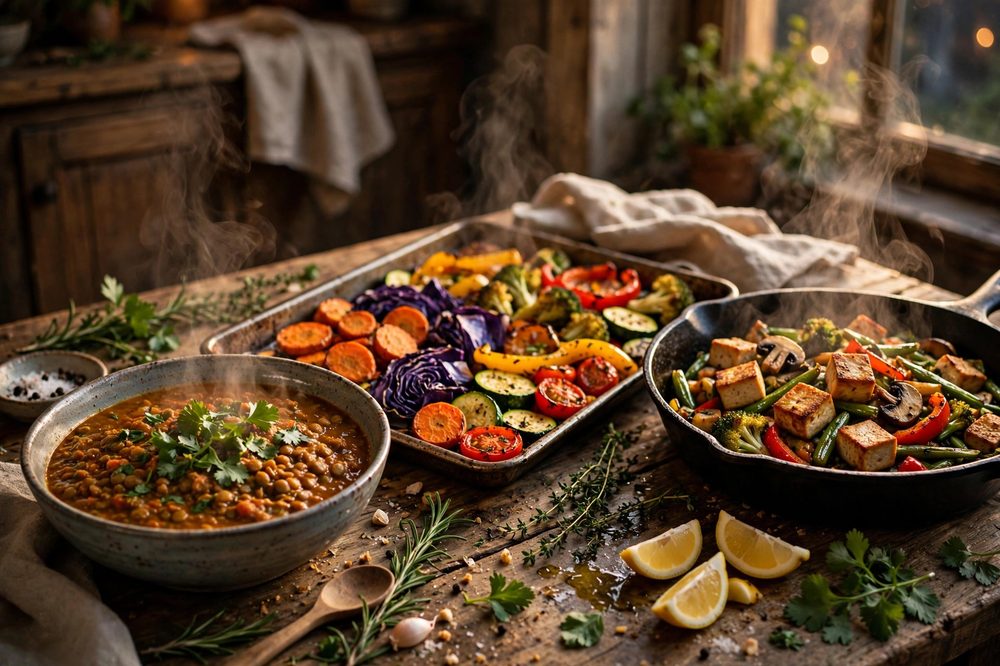
Short answer: you probably don't need a shopping trip to eat plant-based tonight. Open your fridge and look at what's actually there — a few carrots, some leftover beans, half a cabbage, a block of tofu, a bunch of herbs going soft. That is a dinner, not a problem. Plant-based cooking at its best is not a special diet aisle at the supermarket; it is the old, practical habit of cooking the vegetables you already own before they go to waste.
The idea behind this guide is simple: your fridge and garden decide the menu. Whether you grow a few herbs on a balcony, keep a vegetable patch, or just buy a weekly veg box, the same rule applies — cook the oldest vegetables first, build the meal around a plant protein, and let one strong flavor direction pull the plate together. Below are six dinners that work this way, with the ingredients and a sketch of the method. None of them needs anything exotic, and all of them scale up for leftovers.
1. Weeknight lentil curry
Key ingredients: red or brown lentils, onion, garlic, ginger, canned or fresh tomatoes, coconut milk (or stock), curry powder or garam masala, spinach or any leafy green, lemon.
Soften the onion, garlic and ginger in oil, bloom the spices for a minute, then add lentils, tomatoes and liquid and simmer until the lentils collapse into a thick stew — about 25 minutes. Stir in the spinach at the end and finish with lemon juice. Serve over rice or with flatbread. Lentils are the workhorse of plant-based dinners: cheap, filling, full of fiber and iron, and they absorb whatever flavor you give them. A pot made tonight is even better tomorrow.
2. Roasted rainbow vegetables on a sheet pan
Key ingredients: any mix of sweet potato, carrots, zucchini, bell peppers, red onion, cauliflower or beets, olive oil, smoked paprika, cumin, a can of chickpeas, tahini or yogurt, herbs.
Cut everything into roughly equal pieces, toss with oil and spices, and roast at 200 °C until the edges char — about 30 minutes. Add the chickpeas for the last ten minutes so they crisp up. Serve straight from the pan with a drizzle of tahini or a spoonful of yogurt and a handful of chopped herbs. This is the best "fridge rescue" dinner there is: almost any vegetable that looks tired roasts beautifully, and the high heat forgives a lot.
3. Tofu and vegetable stir-fry
Key ingredients: firm tofu, broccoli, bell pepper, carrots, mushrooms, garlic, soy sauce, sesame oil, chili, rice or noodles, peanuts or sesame seeds.
Press the tofu, cube it, and fry in a hot pan until golden on at least two sides — that crust is what makes tofu satisfying. Set it aside, stir-fry the vegetables in order of firmness (carrots first, mushrooms and peppers next, broccoli last), then return the tofu with a splash of soy sauce, sesame oil and chili. Serve over rice or noodles with crushed peanuts. The whole thing takes about 20 minutes, and the method works with any vegetable in the crisper drawer.
4. Bean and sweet potato tacos
Key ingredients: black beans or pinto beans, sweet potato, corn tortillas, onion, cumin, smoked paprika, lime, avocado, salsa, cabbage or lettuce, coriander.
Roast the sweet potato in cubes with cumin and paprika while you warm the beans with onion and garlic. Fill warm tortillas with both, then pile on shredded cabbage, avocado, salsa and a squeeze of lime. Tacos are a brilliant plant-based format because they are built at the table: everyone assembles their own, so a picky eater and a hungry one both get exactly what they want. Swap in any beans you have — kidney, cannellini or chickpeas all work.
5. Garden pasta with white beans and greens
Key ingredients: pasta, cannellini or butter beans, garlic, chili flakes, cherry tomatoes or a handful of spinach or kale, olive oil, lemon zest, parmesan or nutritional yeast.
While the pasta boils, gently fry garlic and chili in olive oil, add the tomatoes until they slump, then stir in the beans and greens until they wilt. Toss with the drained pasta and a splash of pasta water, finish with lemon zest and a shower of cheese or nutritional yeast. This is a 15-minute dinner that tastes like it took an hour, and it uses up the two things that linger in most fridges: half a bag of greens and a tin of beans.
6. Stuffed peppers or a hearty vegetable soup
Key ingredients: bell peppers (for stuffing) or any root and leafy vegetables (for soup), rice or quinoa, lentils or beans, onion, garlic, tomato paste, stock, herbs.
For stuffed peppers, mix cooked rice with beans, tomato paste and herbs, fill halved peppers and bake until tender. For soup, sweat onion and garlic, add chopped vegetables and lentils, cover with stock and simmer 30 minutes, then blend half for a creamy texture. Soup deserves its place on this list because it is the ultimate garden-fridge dinner: it welcomes whatever is left — the last carrot, the soft tomato, the wilting herbs — and turns it into something warm and complete.
Protein-combining tips for plant-based meals
The most common worry about plant-based dinners is protein, and it is mostly a solved problem once you know the pattern. Most plant foods contain protein, but only a few — soy, quinoa, buckwheat — contain all nine essential amino acids on their own. The fix is not complicated math at every meal; it is variety across the day. These combinations make a dinner genuinely filling:
- Beans + grains. Rice and beans, bread and lentil soup, pasta and white beans — the classic pairing covers the amino acids each side lacks.
- Tofu, tempeh or edamame. Soy foods are complete proteins on their own, so a tofu stir-fry needs no pairing at all.
- Lentils + a grain. Lentil curry over rice, or lentil soup with crusty bread, lands around 18–20 g of protein per serving.
- Nuts and seeds as finishers. A spoonful of peanut butter in a curry, tahini on roasted vegetables, or pumpkin seeds over soup adds protein and healthy fat.
- Don't forget the vegetables themselves. Broccoli, spinach, peas and sweet potatoes all contribute meaningful protein once the portions are generous.
One practical tip: aim for one clear protein anchor per dinner rather than chasing a perfect amino-acid score. If the plate has beans, lentils, tofu or a generous serving of quinoa, you are covered.
Start with what's already in your fridge
The hardest part of a plant-based dinner is rarely the cooking — it is the 6:30 pm moment of staring into the fridge and seeing ingredients instead of a meal. That is exactly what fridge-first tools are for. With FridgeChef, you snap one photo of your fridge and the app identifies the vegetables, beans and proteins you actually have, then suggests recipes — including plant-based ones — matched to those ingredients. No extra shopping, no guessing, and the recipes are filtered by diet, time and calories.
Tonight, try one dinner from this list with the vegetables you already own. Tomorrow, the leftovers are lunch. And the fridge, for once, will be a little lighter — which is the whole point of cooking from a garden fridge.
Try it on your own fridge tonight
One photo. Plant-based recipes from your real ingredients. Free, no sign-up.
Open FridgeChef free